EditVideo Agent
Senses, hands and composition skills that let an AI edit video. EditVideo Agent is an MCP server and CLI that gives Claude, Codex or any MCP client the ability to read footage and audio, edit a revision-locked timeline or the generated source code, render with Remotion or HyperFrames, and check the result with measurements, then iterate.
It is not a video editor for people and has no studio UI. The calling model makes the editorial and aesthetic decisions; the runtime executes them deterministically and returns evidence (frames, crops, audio, numbers). There is no hidden beauty score and no approval gate. Tiếng Việt: README.vi.md.
v0.8.0 + unreleased upgrades: 137 MCP tools · 95 runnable effects (each with a before/after preview strip in both engines) + 7 tested combos · 18 layer kinds · 17 explainer recipes + 4 title recipes · 16 Vietnamese-complete font families · 24 palettes · 17 style kits · 7 original LUTs plus a scene-referred colour graph.
What the AI gets
| Capabilities | |
|---|---|
| Senses | Index and inspect video windows with real frames and audio blocks; crops with exact coordinate mapping; transcripts with word timing; audio events; music tempo, sections, hits and beat-fit; dialogue reading (speakers, pauses, filler candidates); edit-event profile (cuts, punch-ins, overlay pops); motion audit (static spans, judder, frozen endings, baked letterbox bars); colour statistics, scopes and shot consistency; planar and region tracking; reference-video study. |
| Hands | Revision-locked timeline patches (shots, layers, keyframes, transitions, audio); expressions as data — track modifiers (loop, inertia, wiggle), follow-through, drivers (link any track to another) and two-bone IK; masks, track mattes, chroma key, corner pin / screen replacement; native 3D scenes (glTF, lights, keyed spots, turntables); a scene-referred colour graph (camera log → ACEScct grading → Cineon print look under the output transform → display, with tracked windows); retime, stabilise, reframe; dialogue condensing with room tone; multicam sync and switching; aspect adaptation (9:16, 4:5, 1:1); optional GPU tools (SAM 2 masks, LaMa/ProPainter inpainting, local LTX footage). |
| Composition skills | Recipes that compile to editable layers: titles (impact cards, lockups, word cards, sound-first), explainers (diagrams, plots, unit grids, camera stages, documentary time cards, evidence_3d), professional edit recipes, ad and trailer planning/audits, direction cards, a design library with glyph-measured layout (including ink-measured line height for stacked Vietnamese diacritics). |
| Learning from successful work | learn (the learnkit package, host-independent): register finished works of any kind (video, image, audio, web page, text) with evidence of success against a baseline, measure them and their labelled parts with the same senses, compare winners with controls (effect sizes, confounders), keep evidence-gated blueprints, measure new work against them and log real outcomes. No model training. Guide. |
| Craft memory | learning_library retrieves prior studies and original craft lessons in Vietnamese/English with source windows; remember_lesson preserves purpose, use/avoid, steps, tool examples and demonstrations across sessions. Local retrieval, no model training or automatic example execution. Workflow. |
| Shorts and films | sequence_plan selects inspected multi-source windows under a story budget and builds an editable project with audio; film_world maintains cast/prop state and per-shot generation packets. TikTok craft: shortform_audit reads the rendered short against platform UI zones and evidence-graded rules; pop captions, face-following reframes, talking-head selects. Academic basis and workflow. |
| Self-review | audit_timeline, motion_audit, motion_quality, cut_audit and an independent reviewer agent (.claude/agents/editvideo-reviewer.md, rubric in docs/REVIEW_RUBRIC.md) that judges renders and code from evidence and returns prioritised fixes. |
Token economy. Tool I/O is compacted at the protocol edge: compact JSON with rounded floats, slimmed schemas, no
duplicate structured copy, catalogs that list one-line rows until an exact id is asked for, handles (track_id,
manifests) instead of dumps, and image packets whose text carries only evidence ids. EDITVIDEO_TOOLSET=compact
exposes 7 entry tools for small-context hosts. See docs/AI_ERGONOMICS.md.
Demo
Three short archive films built end to end by the system from public-domain material (720p previews; credits in docs/demo):
 |
 |
 |
|---|---|---|
Leo thang 1964-1968: archive_montage, cuts tightening toward a hit |
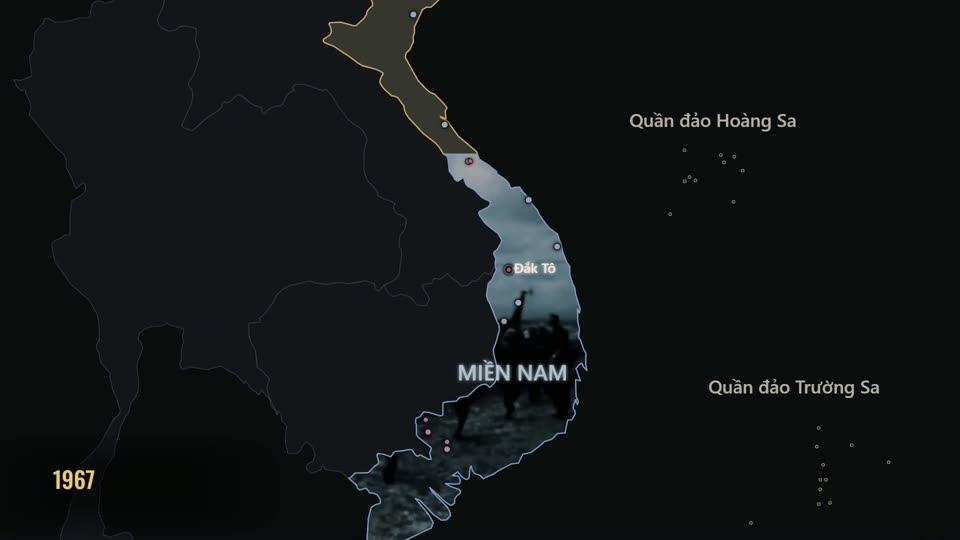
Lan rộng 1965-1968: map_matte, footage inside the land it was shot in |
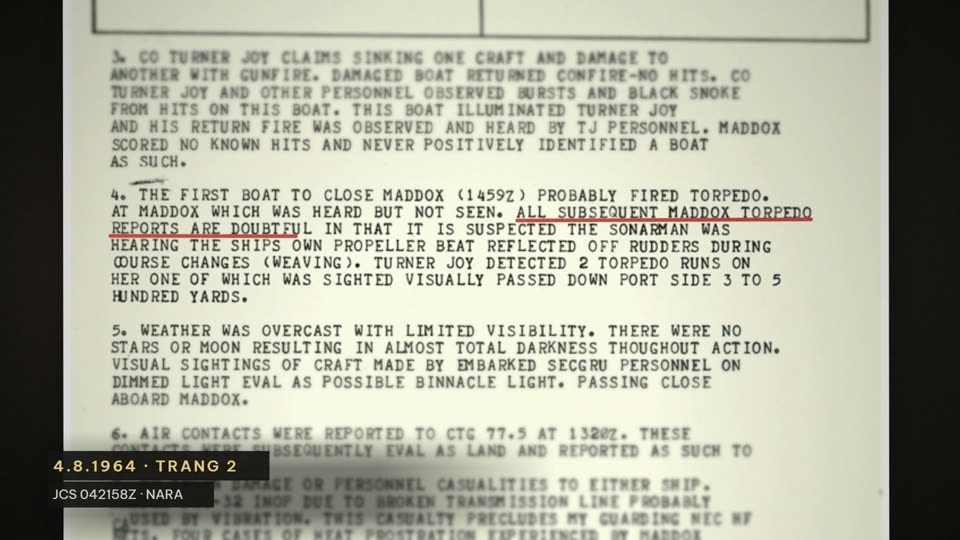
Vịnh Bắc Bộ 1964: dossier, the story's own documents shot close |
Quick start
Requirements: Python 3.11+, Node.js 22+, FFmpeg/FFprobe on PATH. Windows is the tested platform; setup.sh covers the
core runtime on Linux/macOS (less tested). The full guide, with prerequisites, optional extras, client configuration
and troubleshooting, is INSTALL.md (tiếng Việt); what the system is and its contracts:
docs/SPEC.md.
./setup.ps1            # core: Python venv, engines (npm ci), writes .mcp.json for this clone
./setup.ps1 -Vision    # + SAM 2 / depth / LaMa (CUDA, ~2.5 GB)
./setup.ps1 -Temporal  # + ProPainter and local LTX footage
./setup.ps1 -Voice     # + offline Vietnamese narration: Piper (GPL-3.0, separate process), vi_VN voice and Whisper small for word timing (~580 MB)
Claude Code: open the folder; .mcp.json (written by setup from .mcp.example.json) registers the
server, and the skill lives in .claude/skills/editvideo-agent.
Codex: skill in .agents/skills/editvideo-agent; add the server:
[mcp_servers.editvideo]
command = '<repo>\.venv\Scripts\python.exe'
args = ['<repo>\run.py']
Start every session with editvideo_bootstrap(task) → editvideo_discover_tools(query, include_schema=true). The
bootstrap reports the server version and tool count so a stale client connection is easy to spot. One-shot CLI:
echo '{"tool":"editvideo_list_projects","arguments":{}}' | python run.py --cli.
Verify
python -m pip install -r requirements-dev.txt
python -m pytest -q
About 600 tests run in about 15 minutes on CPU (FFmpeg, Node and the Remotion Chromium are needed; GPU model tests only
run with EDITVIDEO_RUN_RUNTIME_TESTS=1, and tests of optional extras skip when the extra is not installed). The suite
uses its own temporary data store. Synthetic ground-truth generators (tests/synth_*.py) check music, dialogue and
multicam analysis against known answers.
Repository layout
editvideo/        MCP server, timeline model, perception, recipes, colour, audio, review
engines/          Remotion entry (AgentVideo.tsx), HyperFrames runtime, shared effects.js / scene3d.js
assets/           bundled fonts (with licences), original LUTs, vendored library previews
.claude/ .agents/ skills for Claude Code and Codex; the independent reviewer agent
docs/             guides (workflows, colour/3D, explainer kit, review rubric, research log)
examples/         reference build scripts (the sample films)
scripts/          setup helpers, atlas builders, repo facts
tests/            pytest suite and synthetic ground-truth generators
Runtime state (data/) and renders (outputs/) stay local and are git-ignored; publish chosen renders as release
assets.
Documentation
Install · Specification · Demo films · Pro workflows · Explainer kit · Colour, depth & 3D · Design library · Model integration · AI ergonomics · Review rubric · Learning from references · Changelog · Contributing · Code of conduct · Security
Licence
EditVideo Agent is licensed under the Apache License 2.0 (NOTICE). The engines, fonts, models, data and media it uses keep their own licences: see THIRD_PARTY_NOTICES.md.
- Remotion is free for individuals and small companies, but larger for-profit organisations need a Remotion company licence. HyperFrames (Apache-2.0) is the open engine.
- ProPainter is non-commercial.
- Piper (GPL-3.0) runs as a separate process.